
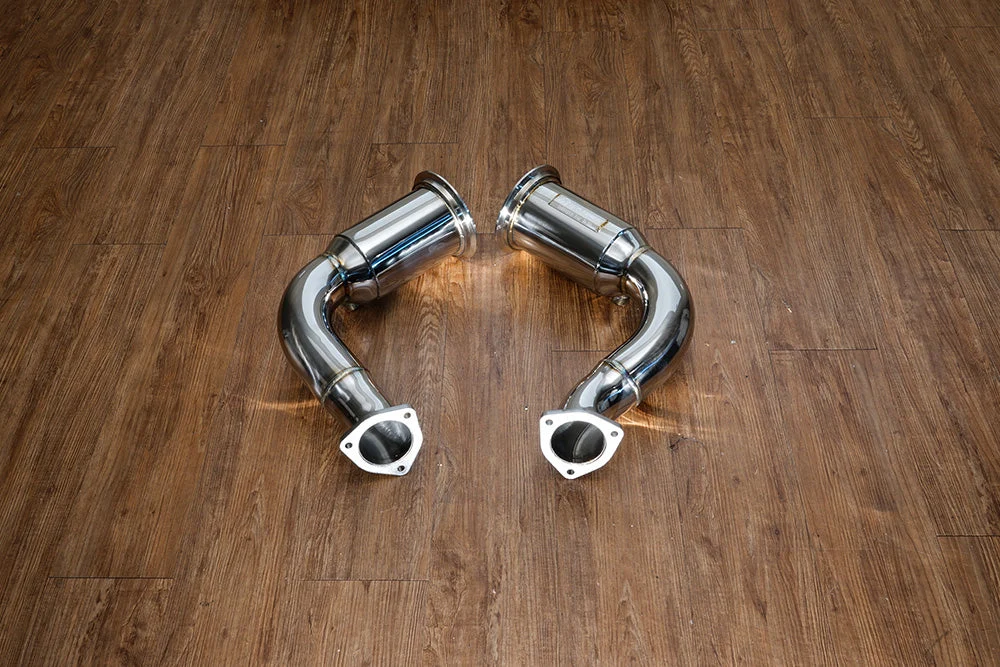
There’s a point when owning a performance car stops being about getting from A to B and starts becoming about the experience. The sound when the engine fires, the way the turbocharger responds, and that little surge of power when you press the accelerator — these details are what make fast cars memorable. For many enthusiasts, the exhaust system is one of the first areas worth exploring when they want to make that experience more exciting.
Among the most popular exhaust modifications are downpipes. Positioned close to the turbocharger, downpipes play an important role in moving exhaust gases away from the engine. Changing their design can influence airflow, sound, response, and the way the entire powertrain feels. But choosing the right setup requires more thought than simply buying the most aggressive-looking component.
Understanding What a Downpipe Does
The downpipe is connected directly to the turbocharger and forms an important part of the exhaust path. Exhaust gases leave the turbo at extremely high temperatures, so the design needs to handle considerable heat while allowing gases to move efficiently.
Factory downpipes are engineered around several priorities. They need to control emissions, keep noise within regulations, withstand years of use, and maintain predictable vehicle behavior. Performance-oriented alternatives may use larger tubing, smoother bends, high-quality materials, or different catalyst arrangements to reduce restrictions.
That doesn’t mean an aftermarket downpipe is automatically an upgrade. Poor construction or incorrect fitment can cause leaks, excessive heat, unwanted vibrations, or sensor-related problems. Quality matters.
Lamborghini Urus and the Search for Better Exhaust Flow
The Lamborghini Urus is an unusual machine. It has the practicality of an SUV, yet its performance can rival cars that look considerably more focused. That’s part of the reason owners often explore modifications that make the vehicle feel even more dramatic.
When researching lamborghini urus downpipes , enthusiasts typically look at exhaust flow, sound, fitment, and compatibility with the vehicle’s sophisticated electronics. A properly engineered system can give the exhaust a more pronounced character while potentially reducing restrictions close to the turbochargers.
Of course, bigger sound isn’t always the goal. Some Urus owners use their vehicles every day, and nobody wants an exciting exhaust note to turn into constant highway drone. A balanced setup can provide a stronger personality without making normal driving unpleasant.
Catted and Catless Options on the G63 AMG
The Mercedes-AMG G63 has its own unique appeal. It’s unmistakably boxy, luxurious, and powerful, but it also has the mechanical attitude enthusiasts expect from an AMG.
For owners considering mercedes g63 amg w463a catted and catless downpipes , understanding the difference between the two options is important. Catted downpipes retain catalytic converters, which help control exhaust emissions. Depending on the specific product and regulations where the vehicle is operated, they can offer a compromise between performance-oriented exhaust flow and emissions equipment.
Catless designs remove the catalytic converter. They can produce a more aggressive exhaust character and reduce restrictions, but they may also increase exhaust smell, noise, and emissions-related complications. Depending on local laws, they may not be suitable for road use.
So, the “best” option isn’t universal. It depends on how the G63 is driven and what the owner actually wants from the vehicle.
Audi RS4 and RS5: A Different Kind of Performance
Audi’s RS4 and RS5 have built a reputation for combining everyday usability with serious performance. They’re the sort of cars that can handle a morning commute and still feel special when the road becomes interesting.
For enthusiasts researching audi rs4 rs5 downpipes , compatibility should be checked carefully before making a purchase. Different generations and engine configurations can require different hardware, so assuming that one component fits every RS4 or RS5 can be an expensive mistake.
A well-designed downpipe can become part of a larger performance package, especially when combined with suitable software and supporting modifications. But the exhaust system should still be viewed as a complete setup rather than a collection of unrelated parts.
Why Materials and Construction Matter
Downpipes operate in one of the hottest areas of the vehicle. That makes material selection and construction quality particularly important.
Stainless steel is commonly used because it provides good corrosion resistance and can tolerate high temperatures. Weld quality also matters. Poor welds can eventually develop cracks, especially when the vehicle experiences repeated heat cycles.
Sensor ports need to be correctly positioned, flanges should be accurately manufactured, and the finished component should provide enough clearance around nearby wiring, hoses, and heat-sensitive parts. These aren’t glamorous details, but they’re the things that tend to matter six months after installation.
Sound, Comfort, and Everyday Driving
Let’s be honest — sound is one of the biggest reasons enthusiasts modify their exhaust systems.
A freer-flowing setup can make turbo noises more noticeable and give acceleration a harder, more mechanical edge. On a spirited drive, that’s part of the fun. But there’s a practical side too.
A vehicle that sounds fantastic for a short drive might become tiring during a long trip if the exhaust creates excessive cabin resonance. Owners should think about where they drive most often. A weekend performance car can tolerate a very different setup from a vehicle used for commuting every morning.
Software and Supporting Modifications
Modern performance vehicles aren’t controlled by mechanical components alone. Sophisticated engine-management systems constantly monitor temperatures, oxygen levels, boost pressure, and other parameters.
Changing exhaust hardware can therefore affect how the vehicle behaves electronically. Depending on the configuration, ECU calibration may need to be considered alongside hardware changes. Supporting upgrades such as improved cooling or intake components may also become relevant when pursuing larger performance gains.
It’s usually better to build a modification plan rather than adding random parts one at a time.
Installation Is Part of the Upgrade
Even a high-quality downpipe can cause problems when installed incorrectly. Proper installation should include checking alignment, sensor connections, mounting hardware, heat clearance, and potential exhaust leaks.
After installation, the system should be inspected again after several heat cycles. Components expand and contract as temperatures change, so a quick follow-up inspection can catch small problems before they become expensive ones.
Professional installation is especially worthwhile on modern luxury-performance vehicles where access can be complicated and replacement parts aren’t exactly cheap.
Choosing a Setup That Makes Sense
The most satisfying performance upgrades aren’t necessarily the most extreme. They are the ones that suit the owner’s driving habits.
A daily-driven Urus, G63, RS4, or RS5 may benefit from a more balanced configuration, while a dedicated track or competition vehicle might have completely different priorities. Emissions requirements, local regulations, sound levels, reliability, and warranty considerations should all be part of the decision.
In the long run, a thoughtful setup is usually more enjoyable than simply chasing maximum volume or headline performance figures.
Final Thoughts
Downpipes can transform the character of a performance vehicle, but they’re only one piece of a much larger puzzle. The best results come from combining quality hardware with correct fitment, sensible software calibration, professional installation, and a clear understanding of how the vehicle will actually be used.
Whether it’s the muscular G63, the outrageous Urus, or the understated speed of an Audi RS model, modifications should add to the driving experience rather than take away from it.
After all, performance tuning isn’t really about having the biggest list of parts. It’s about opening the garage door, starting the engine, and smiling because the car feels a little more like your own.