There was a time when every piece of online content had a clear goal — get the click. Headlines were crafted to pull you in, thumbnails were designed to tempt you, and success was measured by how many people left the platform to visit a website.
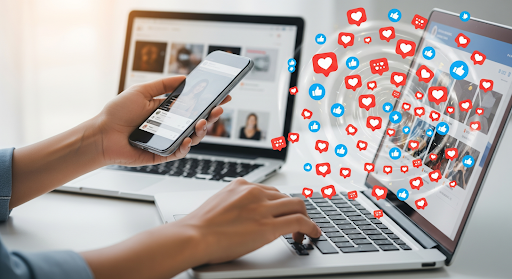
But if you look closely at how people consume content today, something has shifted. We scroll, we skim, we watch — often without clicking anything at all. Information is consumed right there, in the feed, in seconds.
And somehow, brands are adapting to this behavior instead of fighting it.
What Exactly Is Zero-Click Content?
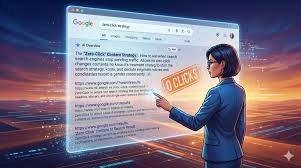
Zero-click content is exactly what it sounds like — content that delivers value without requiring the user to click through to another page.
Think of a LinkedIn post that explains a concept in detail, an Instagram carousel that teaches you something step by step, or a short video that answers a question completely within 30 seconds.
You get what you came for, and you move on.
No blog link, no landing page, no extra step.
Why This Approach Is Gaining Ground
The internet is crowded. Attention spans are shorter, and competition for that attention is intense.
People don’t always have the patience to click, wait for a page to load, and then dig through content. They want quick, digestible information — something they can consume instantly.
Platforms have also played a role here. Algorithms tend to favor content that keeps users engaged within the platform. The longer you stay, the better it is for them.
So naturally, content that doesn’t push users away — content that satisfies curiosity on the spot — tends to perform well.
Related reading: Why the Most Memorable Food Trucks Usually Get the Design Right First
The Big Question Brands Are Asking
At some point, this shift leads to a slightly uncomfortable question for marketers — if people aren’t clicking, how do we measure success?
That’s where the idea behind Zero-click content strategy kya hai aur brands isse kaise use kar rahe hain? starts to make sense.
It’s less about immediate traffic and more about long-term visibility, trust, and recall. Instead of chasing clicks, brands are focusing on being consistently useful.
Related reading: When Creativity Meets Code: Are AI Ads Changing the Way We Connect?
Building Trust Without Asking for Anything
There’s something refreshing about content that doesn’t ask you to do anything.
No “click here,” no “learn more,” no aggressive call-to-action. Just information, presented clearly and helpfully.
Over time, this builds trust. When a brand consistently provides value without pushing for a sale, people start to remember it differently.
It feels less like marketing and more like… well, help.
And that subtle shift can be powerful.
Where Zero-Click Content Works Best
Not all content needs to be zero-click, but it works particularly well in certain formats.
Educational posts, quick tips, industry insights, explainers — anything that can be delivered in a concise, engaging way fits naturally into this approach.
Social media platforms are the obvious home for it, but even search engines are moving in this direction. Featured snippets, knowledge panels, instant answers — they all reduce the need to click.
In a way, zero-click behavior isn’t new. It’s just becoming more visible.
The Trade-Off: Traffic vs Visibility
Of course, there’s a trade-off.
If users don’t click, your website traffic might not grow as quickly. And for businesses that rely heavily on page views or conversions, that can feel like a loss.
But the gain comes in a different form — reach, engagement, and brand recognition.
People might not visit your site immediately, but they remember your content. And when they do need something more in-depth, your brand is already in their mind.
It’s a slower, more subtle kind of growth.
How Brands Are Adapting
Smart brands aren’t abandoning traditional strategies — they’re blending them.
They use zero-click content to attract attention and build trust, then guide interested users toward deeper content when it makes sense.
It’s less about forcing the click and more about earning it.
You might see a detailed post that answers a question fully, followed by a gentle mention of where to learn more. No pressure, just an option.
And interestingly, that often works better.
The Human Side of It
What makes zero-click content feel different is its tone.
It’s conversational, direct, sometimes even a bit imperfect. It doesn’t try too hard to sell or impress. It just tries to be useful.
And in a digital world that often feels overwhelming, that simplicity stands out.
People appreciate content that respects their time.
Final Thoughts
Zero-click content isn’t about giving everything away for free. It’s about meeting people where they are and understanding how they consume information today.
Clicks still matter — they haven’t disappeared. But they’re no longer the only measure of success.
Sometimes, the impact of content isn’t in where it takes you, but in what it leaves behind — a thought, a solution, a moment of clarity.
And in that sense, zero-click content might be doing exactly what good content was always meant to do… just a little more quietly.