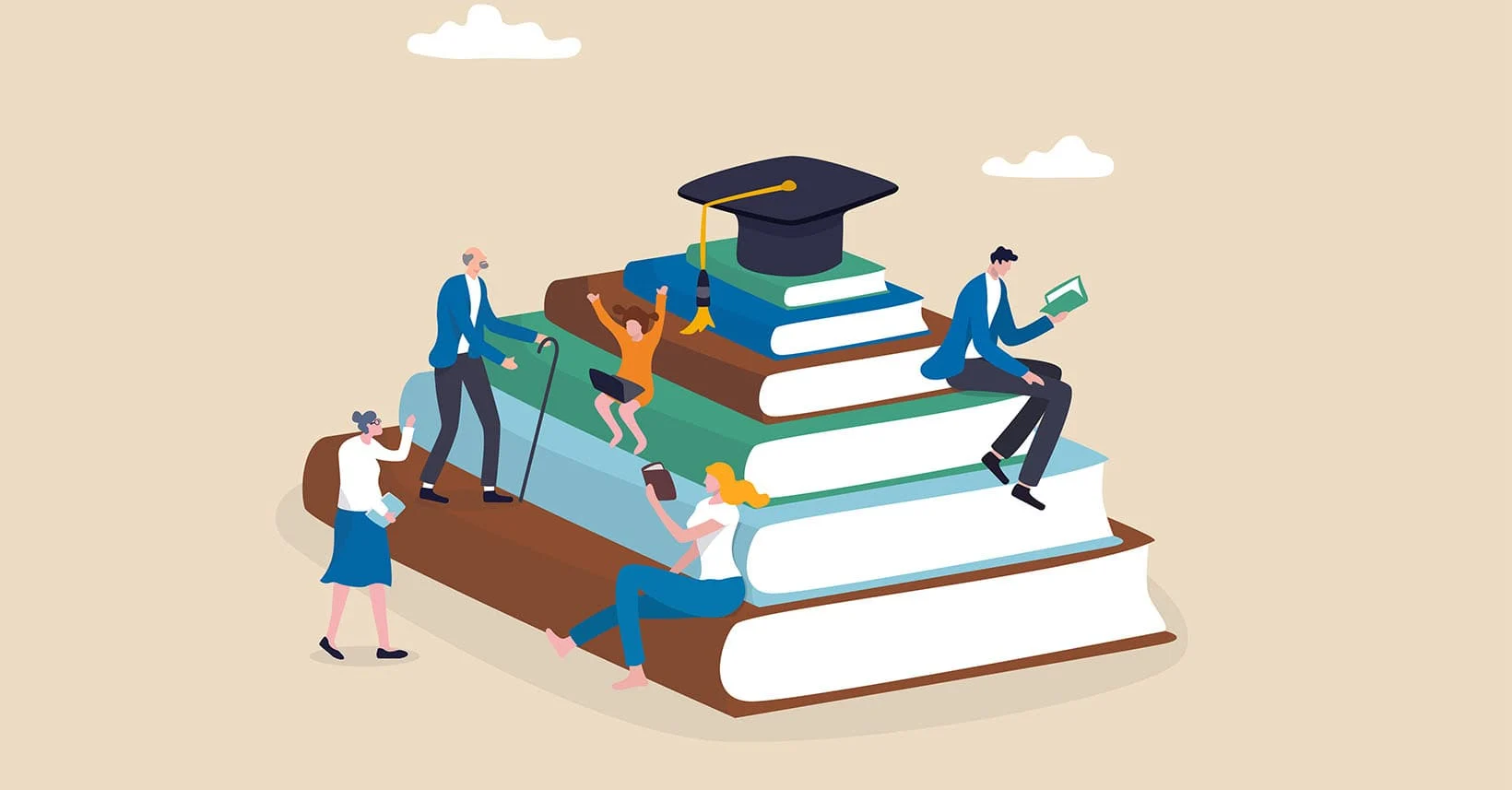
There was a time — not that long ago, actually — when the path felt pretty linear. School, college, degree, job. That was the formula most of us grew up believing in. A degree wasn’t just a qualification; it was a safety net, a status symbol, and for many families, a dream fulfilled.
But somewhere along the way, that neat equation started to blur. You see it in conversations now — students questioning the value of a four-year degree, professionals picking up new skills mid-career, companies hiring based on portfolios rather than marksheets. It’s not a rebellion exactly… more like a quiet shift in priorities.
The Traditional Comfort of Degrees
Let’s be honest — degrees still matter. They open doors, especially in fields like medicine, law, engineering, or academia, where structured knowledge and certification are non-negotiable.
There’s also something reassuring about the process itself. A degree offers a defined timeline, a clear curriculum, and a sense of completion. You know when you start, and you know when you finish.
For many, it’s not just about learning; it’s about identity. “I’m an engineer,” “I’m a graduate” — those labels carry weight.
Skills: The New Currency?
At the same time, the job market has evolved in ways that weren’t entirely predictable.
Today, companies care about what you can do just as much — if not more — than what you’ve studied. A self-taught coder with a strong GitHub portfolio might compete with someone who has a formal computer science degree. A digital marketer who’s run real campaigns often stands out more than someone who’s only studied theory.
And that’s where the debate gets interesting — Skill-based learning vs degree-based education: future kis taraf ja raha hai?
It’s not a simple either-or answer, but the direction of travel is becoming clearer.
Why Skill-Based Learning Is Gaining Ground
Part of the appeal is flexibility. You don’t need to commit to years of study to learn a new skill. Online platforms, bootcamps, workshops — they’ve made education more accessible and, in many ways, more practical.
There’s also immediacy. You learn something today, you apply it tomorrow. That feedback loop is powerful.
And then there’s cost. Traditional degrees can be expensive, sometimes leaving students with financial pressure before they even start earning. Skill-based learning, in contrast, often feels more affordable and targeted.
But Degrees Aren’t Going Anywhere
Despite all this, it would be a mistake to assume degrees are becoming irrelevant.
They still provide depth — a structured understanding of a subject that’s hard to replicate through short-term courses. They also teach things that aren’t always visible on a resume: discipline, critical thinking, exposure to diverse ideas.
Related reading: Dog Boarding and Training: What Owners Should Know
In many industries, degrees remain a baseline requirement. And in some cases, they offer credibility that skills alone can’t fully replace.
So no, degrees aren’t disappearing. They’re just being re-evaluated.
The Hybrid Approach Is Emerging
What’s fascinating is how people are starting to blend both worlds.
A student might pursue a degree while simultaneously learning practical skills online. A working professional might return to education, not for another degree, but for specific certifications.
It’s less about choosing one path and more about building a layered skillset over time.
Employers, too, are adapting. Many are shifting toward skill-based hiring, focusing on real-world ability rather than just academic qualifications. At the same time, they still value the foundation that formal education provides.
The Role of Curiosity and Adaptability
If there’s one thing that stands out in this evolving landscape, it’s the importance of staying curious.
The world is changing fast — technologies, industries, even job roles themselves. What you learn today might need updating tomorrow. In that sense, education is no longer a one-time event; it’s an ongoing process.
And maybe that’s where skill-based learning has an edge. It encourages continuous growth, constant adaptation. But without a strong foundation, it can sometimes feel scattered.
Balance, again, seems to be the key.
So, What Should You Choose?
This is where things get personal.
If you’re someone who thrives in structured environments and values depth, a degree can offer immense value. If you prefer hands-on learning and want to enter the workforce quickly, skill-based learning might feel more aligned.
But the smartest approach? Probably a mix of both.
Build a solid base, then keep adding to it. Learn, unlearn, relearn — as cliché as it sounds, it holds true.
Final Thoughts
Education isn’t what it used to be — and that’s not necessarily a bad thing.
We’re moving toward a more flexible, more personalized understanding of learning. One where degrees and skills aren’t competing, but complementing each other in unexpected ways.
The future doesn’t belong to one model over the other. It belongs to those who are willing to adapt, to keep learning, and to stay open to change.
And maybe, just maybe, that’s the real lesson here.