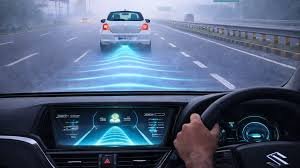
There’s something quietly fascinating about how cars have evolved in India over the past few years. Not too long ago, features like power windows felt like a luxury. Today, we’re talking about cars that can brake on their own, warn you if you drift out of your lane, and even maintain distance from the vehicle ahead. Sounds futuristic, right? But the real question isn’t how advanced these systems are — it’s whether they actually work in the messy, unpredictable reality of Indian roads.
Let’s unpack that a bit.
What Exactly Are ADAS Features?
ADAS, or Advanced Driver Assistance Systems, is basically a collection of technologies designed to make driving safer and less stressful. Things like adaptive cruise control, lane-keeping assist, automatic emergency braking, blind-spot monitoring — you’ve probably seen these terms thrown around in car ads lately.
On paper, they sound impressive. And honestly, in controlled environments, they are. But Indian roads are anything but controlled.
Indian Roads: A Different Kind of Challenge
Driving in India isn’t just about following lanes and signals. It’s about reacting to sudden surprises — a bike cutting across, a cow casually crossing the road, a pedestrian appearing out of nowhere, or even poorly marked lanes that seem to disappear mid-way.
This is where things get tricky.
Most ADAS systems are designed and tested in countries where road discipline is relatively predictable. Lane markings are clear, traffic rules are followed, and infrastructure supports these technologies. In India, that’s not always the case.
And that leads us to the big question — India me ADAS features ka real-life usage: kya yeh sach me helpful hai?
Where ADAS Actually Helps
Let’s be fair — ADAS isn’t useless. In fact, in certain situations, it can be genuinely helpful.
Take highway driving, for example. Long stretches of relatively smoother roads, better lane markings, and more predictable traffic patterns make features like adaptive cruise control and lane assist quite effective. They reduce fatigue, especially on long drives.
Automatic emergency braking can also be a lifesaver — literally — in situations where the driver might react a split second too late.
Even blind-spot monitoring works well in urban settings, particularly when you’re changing lanes in heavy traffic.
So yes, there are real benefits. It’s not just marketing hype.
Where It Starts to Fall Apart
Now comes the part that most brochures won’t tell you.
Lane-keeping assist? It struggles when lane markings are faded or missing — which, let’s be honest, is pretty common in many cities.
Related reading: Mercedes E53 AMG Downpipe and E63 W213 Catted & Catless Downpipes: Performance Guide
Adaptive cruise control? It can get confused in chaotic traffic where vehicles don’t maintain consistent speeds or distances.
Pedestrian detection? It’s improving, but Indian roads present unpredictable human movement patterns that these systems aren’t always trained for.
And then there’s the issue of over-reliance. Some drivers start trusting these systems a bit too much, assuming the car will “handle it.” That’s where things can go wrong.
ADAS is assistance — not autonomy.
The Human Factor Still Matters
At the end of the day, no technology can fully replace human judgment — especially in a country like India, where driving often feels like a blend of instinct, experience, and quick decision-making.
A seasoned driver might anticipate a sudden turn or a risky overtake before it even happens. ADAS systems, on the other hand, react based on sensors and algorithms. They don’t “read” situations the way humans do.
That doesn’t mean ADAS is bad — it just means it has limits.
Is It Worth Paying For?
This is where opinions start to differ.
If you mostly drive on highways or in well-developed urban areas, ADAS features can add real value. They make driving more comfortable and can provide an extra layer of safety.
But if your daily commute involves crowded city roads, unpredictable traffic, and inconsistent infrastructure, the benefits might feel… underwhelming at times.
It’s not that the technology is flawed — it’s just not perfectly aligned with Indian conditions yet.
The Road Ahead
Here’s the thing — ADAS is still evolving. Manufacturers are constantly refining these systems, and as Indian infrastructure improves (hopefully), their effectiveness will naturally increase.
There’s also a learning curve. As drivers become more aware of how these features work — and more importantly, how they don’t — they’ll use them more responsibly.
Think of it like ABS or airbags. There was a time when those were considered optional. Today, they’re essential.
ADAS might follow a similar path… just not overnight.
Final Thoughts
So, are ADAS features genuinely helpful in India?
Yes — but with context.
They’re not magic. They won’t suddenly make chaotic roads orderly or replace the need for attentive driving. But used correctly, they can absolutely enhance safety and comfort in the right scenarios.
Maybe the smartest approach right now is to treat ADAS like a co-driver — one that’s helpful, sometimes impressive, occasionally confused, but definitely not in charge.
And honestly, that’s okay.