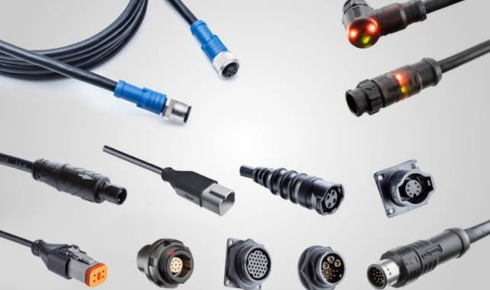
In most electrical and electronic systems, the connector is the last component anyone thinks about and the first one to cause trouble. Cables are specified carefully, enclosures are sized generously, yet the humble interconnect is often picked from a catalogue at the eleventh hour. That habit is expensive. Connector-related faults are among the most common causes of intermittent failures in industrial equipment, and they are notoriously difficult to diagnose. Choosing circular multi pin connectors methodically, rather than by default, pays for itself many times over during the life of a machine.
Why Circular Connectors Dominate Harsh-Duty Applications
The circular format is not a stylistic choice. A round shell distributes mechanical stress evenly, seals naturally against O-rings and interfacial gaskets, and allows a high density of contacts in a compact footprint. Threaded and bayonet coupling mechanisms wrap around the full circumference, so mating force is spread rather than concentrated. In environments with vibration, moisture, dust or rough handling, circular connectors consistently outlast rectangular alternatives, which is why they dominate defence, rail, process control and stage engineering.
Start with the Electrical Load
Every selection exercise should begin with a circuit list. How many signal lines, how many power lines, and what current does each carry? Contact sizes are chosen accordingly, and many insert arrangements allow power and signal contacts to share one shell, reducing the number of connectors on a panel. Remember to derate: a contact rated for a given current in still air at room temperature will carry less when bundled with others inside a hot enclosure. Reputable manufacturers publish derating curves; use them rather than the headline rating.
Contact Count and Insert Arrangements
Resist the temptation to fill every contact position. Leaving spare positions costs little at purchase and can rescue a project when a design revision adds circuits later. Standardising on a small set of insert arrangements across a product family also simplifies spares holding and reduces the risk of mis-mating, especially when combined with alternate keying positions.
Coupling Mechanism: Threaded, Bayonet or Reverse Bayonet
Threaded coupling offers the highest resistance to loosening and excellent sealing compression, at the cost of slower mating. Standard bayonet coupling mates in a fraction of a turn and provides tactile and audible confirmation. Reverse bayonet designs combine quick coupling with robust vibration resistance and are widely favoured in railway and military vehicle applications. Ranges such as MS connectors built to MIL specifications give designers access to proven threaded-coupling constructions with decades of field history behind them.
Sealing, Temperature and the Operating Environment
Define the worst realistic environment, not the average one. If the connector will see monsoon rain, washdown cleaning or temporary submersion, specify IP67 ingress protection in mated condition and confirm that the rating is certified rather than merely claimed. Check the temperature range of the insulating materials against both ambient conditions and self-heating. For applications with fire safety obligations, such as rolling stock and public venues, ask about halogen-free, flame retardant insulator materials qualified to standards like EN 45545-2.
Shell Materials and Plating
Shell material and plating decide how the connector ages. Aluminium alloy shells with corrosion-resistant plating suit most industrial and military duties, while brass and stainless variants serve specific chemical or marine conditions. Ask specifically about RoHS and REACH compliant finishes; regulations have retired several traditional platings, and a supplier with certified modern alternatives saves you a compliance headache later. Where connectors carry shielded cables, confirm that the plating provides low-resistance shell-to-shell continuity across the mated pair, since shielding effectiveness is only as good as that path.
Termination and Serviceability
Solder buckets suit low-volume builds and workshops with skilled hands, while crimp contacts deliver more consistent quality in production and allow field replacement with simple tooling. Consider who will maintain the equipment ten years from now, and where. A connector that can be repaired at a remote site with a crimp tool and an extraction tool keeps machines earning; one that needs a soldering station may not.
When Standard Parts Are Not Enough
Real projects regularly encounter requirements that catalogues do not cover: a non-standard cable entry, a special plating, a mixed layout that does not exist in the standard arrangements, or a mating half for legacy equipment whose original supplier has vanished. In such cases a customised multipin plug socket developed with the manufacturer is usually faster and cheaper than redesigning the equipment around an ill-fitting standard part. Established connector makers maintain design cells precisely for this purpose, and Indian industry now has ready access to such capability. Manufacturers of circular multi pin connectors based in India, such as Allied Electronics Corporation in Mumbai, have supplied customised interconnects to defence, railway and industrial customers for decades, which means engineering support is available in the same time zone as your factory.
Conclusion
A connector chosen in five minutes can consume five hundred hours of troubleshooting over a machine’s life. Work through the load, the environment, the coupling style and the maintenance plan in that order, and involve the manufacturer when your requirement strays from the catalogue. If a current project involves demanding interconnection requirements, it is worth requesting a technical catalogue and discussing the application with a qualified connector manufacturer before the panel layout is frozen.
Hyperlink Summary
- Anchor Text 1: “MS connectors” → https://aecconnectors.com/ms-connectors.html
- Anchor Text 2: “customised multipin plug socket” → https://aecconnectors.com/customised-products.html
- Anchor Text 3: “circular multi pin connectors” → https://aecconnectors.com/