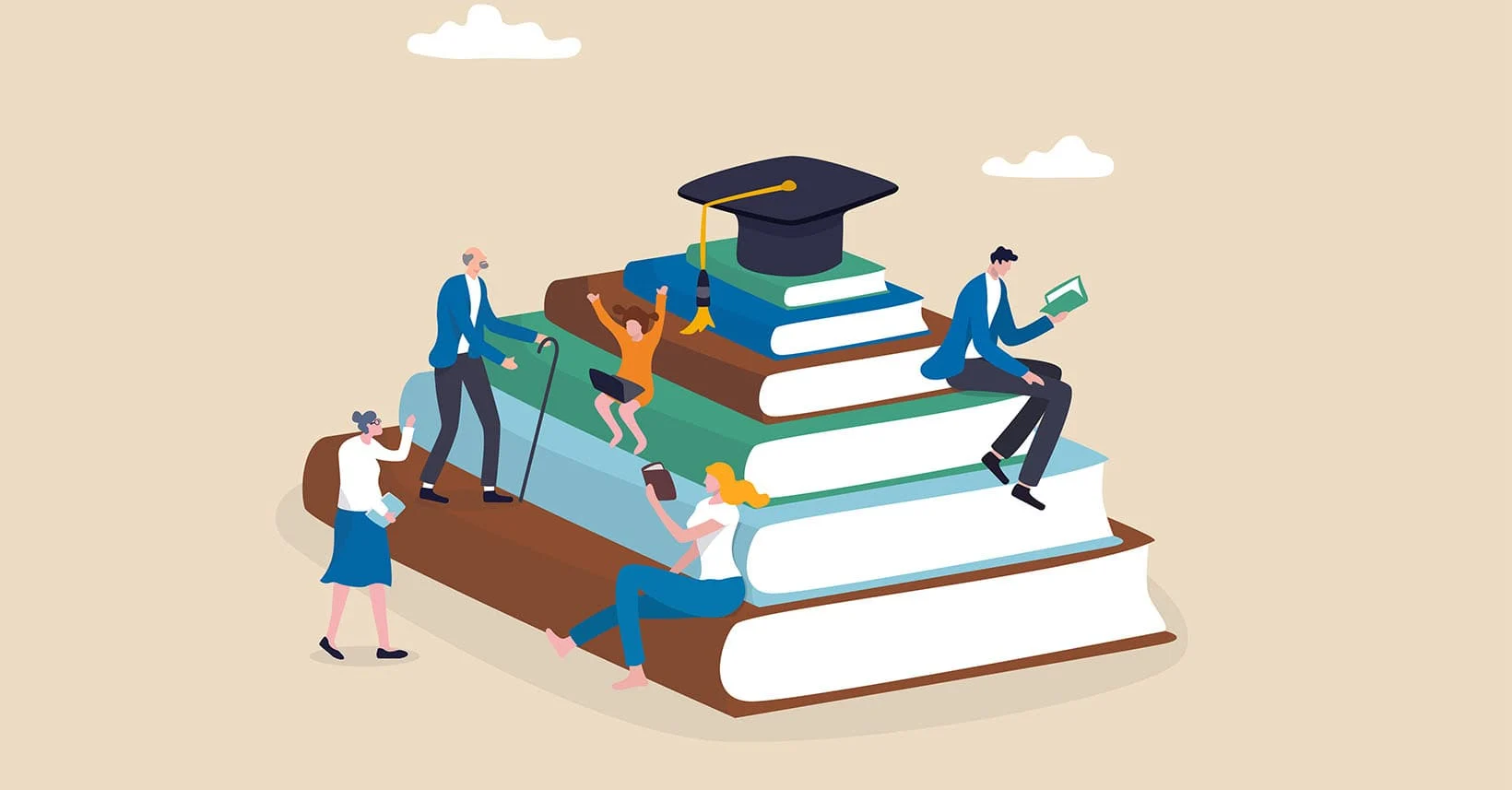
There’s a moment most of us remember — sitting in a classroom, staring at a blackboard, half-listening, half-daydreaming. Learning had a place, a routine, a certain rhythm to it. Then, almost overnight, everything shifted. Screens replaced desks, video calls replaced lectures, and suddenly, education didn’t feel tied to a physical space anymore.
But here’s the interesting part: even after things settled, we didn’t go back fully. Instead, we landed somewhere in between.
That “in-between” is what people now call hybrid learning.
What Hybrid Learning Really Feels Like
On paper, it sounds simple — a mix of online and offline education. But in reality, it’s a bit more layered than that.
Some days you’re in a classroom, engaging with peers, asking spontaneous questions. Other days, you’re learning from your room, pausing videos, revisiting concepts, moving at your own pace. It’s structured, yet flexible. Familiar, yet new.
And for many students, that combination feels… surprisingly natural.
The Shift in How We Learn
What hybrid learning has quietly changed is not just where we learn, but how we learn.
Earlier, learning was mostly linear. You followed the teacher, the schedule, the pace set for everyone. Now, there’s room for personalization. You can rewind a lecture, explore additional resources, or spend extra time on something you didn’t fully understand.
At the same time, offline sessions bring back the human element — discussions, debates, those small moments of clarity that often happen in a room full of people.
This blend has sparked an important question: Hybrid learning models (online + offline) ka long-term effect kya hoga? It’s not just about convenience anymore; it’s about the future of education itself.
The Good: Flexibility and Accessibility
One of the biggest advantages is flexibility.
Students who might have struggled with rigid schedules now have more control over their time. Working professionals can upskill without quitting their jobs. People from smaller towns can access quality education without relocating.
It also reduces certain barriers. Travel time, accommodation costs, even the pressure of being physically present every single day — all of that becomes more manageable.
And let’s not ignore the comfort factor. Learning from your own space, at your own pace, can make a huge difference in how well you absorb information.
Related reading: Dog Boarding and Training: What Owners Should Know
The Not-So-Great Parts
But hybrid learning isn’t perfect. Far from it.
For one, it requires a level of discipline that not everyone naturally has. When you’re learning online, it’s easy to get distracted. One notification, one quick scroll, and suddenly you’ve lost track of the lesson.
There’s also the issue of digital fatigue. Spending hours in front of a screen can be exhausting, both mentally and physically. Over time, it can affect focus and motivation.
And then there’s the social aspect. While offline sessions help, they don’t always fully replace the bonds formed through regular, in-person interaction. That sense of community — it’s harder to replicate online.
Teachers Are Learning Too
Interestingly, it’s not just students who are adapting. Teachers are going through their own learning curve.
Designing a hybrid course isn’t as simple as recording lectures and scheduling classes. It requires rethinking how content is delivered, how engagement is maintained, how assessments are conducted.
Some educators have embraced this shift, experimenting with new methods, blending technology with traditional teaching. Others are still figuring it out — and that’s okay. Change rarely feels smooth in the beginning.
A Different Kind of Classroom
What hybrid learning is slowly creating is a different kind of classroom — one that isn’t limited by walls.
Imagine a student attending a lecture in person, then revisiting the same topic online later that evening. Or participating in a discussion forum with peers from different cities, even countries. The boundaries start to blur.
Learning becomes less about where you are and more about how you engage.
So, What Does the Future Look Like?
It’s unlikely that education will go back to being entirely offline. At the same time, a fully online model doesn’t seem sustainable for everyone either.
Hybrid learning sits in that middle space, offering a balance. Not perfect, not complete — but evolving.
Over time, we’ll probably see more refined versions of it. Better tools, smarter systems, more thoughtful integration of online and offline elements. The rough edges will smooth out.
Final Thoughts
If you step back and look at it, hybrid learning isn’t just a response to a situation. It’s a reflection of how our lives are changing.
We’re used to blending things now — work and home, online and offline, structure and flexibility. Education is simply catching up.
And maybe that’s the real takeaway. Learning is no longer confined to a place or a format. It’s becoming more fluid, more adaptable, more aligned with how we actually live.
It’s still a work in progress, sure. But then again, isn’t all meaningful change?