There’s something oddly fascinating about the idea of having a “digital version” of something real. Not just a photograph or a 3D model, but a living, breathing simulation that behaves almost exactly like its physical counterpart.
That’s essentially what digital twins are — virtual replicas of real-world objects, systems, or even people, constantly updated with real-time data. It sounds a bit futuristic at first, maybe even a little abstract. But once you start noticing where it’s being used, it begins to feel surprisingly practical.
And, in some cases, already part of everyday life — just not in obvious ways.
What Exactly Is a Digital Twin?
A digital twin isn’t just a static model. It’s dynamic. It learns, updates, and evolves based on data collected from sensors, software, and connected systems.
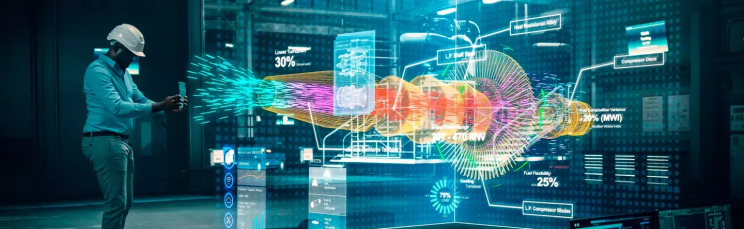
Imagine a factory machine that has a digital counterpart. Every movement, every temperature change, every tiny fluctuation gets mirrored in real time. Engineers can then monitor, test, and even predict issues — without touching the actual machine.
It’s like having a parallel version of reality that you can experiment with safely.
Why This Technology Is Gaining Attention
Part of the appeal lies in prevention.
Instead of waiting for something to break or fail, digital twins allow you to anticipate problems before they happen. That alone can save time, money, and, in some industries, even lives.
There’s also efficiency. Systems can be optimized without disrupting operations. You can test scenarios, tweak variables, and see outcomes — all in a controlled digital environment.
Which brings up a broader curiosity — Digital twins technology ka real-world use cases (manufacturing se healthcare tak).
It’s not limited to one industry. It’s quietly spreading across many.
Manufacturing: Where It All Started
Manufacturing is often where people first encounter digital twins.
Factories use them to monitor equipment, improve production lines, and reduce downtime. If a machine shows signs of wear, the digital twin can simulate what might happen next — allowing teams to fix issues before they escalate.
Related reading: When Devices Start Thinking for Themselves: Understanding the Rise of Edge AI
It’s not flashy, but it’s incredibly effective.
And in large-scale operations, even small improvements can have a massive impact.
Healthcare: A More Personal Application
Now, this is where things get really interesting.
In healthcare, digital twins are being explored as virtual models of patients. Imagine having a digital representation of your body — one that can simulate how you might respond to a particular treatment or medication.
Doctors could test different approaches virtually before applying them in real life. It’s still an evolving field, but the potential is huge.
It shifts healthcare from reactive to proactive — and possibly more personalized than ever before.
Smart Cities and Urban Planning
Cities are complex systems — traffic, energy, water supply, infrastructure — all interconnected.
Digital twins allow planners to create virtual models of entire cities. They can simulate traffic patterns, predict energy consumption, or test how a new development might affect the surrounding area.
Related reading: What I Wish Someone Had Told Me About Advanced SEO Intelligence Before I Hired an Agency
Instead of making decisions based on assumptions, they can rely on data-driven simulations.
It’s a quieter form of innovation, but one that could shape how cities grow in the future.
The Role of Data (and Its Challenges)
Of course, none of this works without data. And lots of it.
Sensors, IoT devices, software systems — they all feed information into the digital twin. The more accurate the data, the more reliable the simulation.
But this also raises questions. Data privacy, security, and management become critical concerns. If you’re creating digital replicas of real-world systems — or even people — the responsibility that comes with it is significant.
It’s not just about what the technology can do, but how responsibly it’s used.
Not Just for Big Industries Anymore
While digital twins started in large-scale industries, the concept is slowly becoming more accessible.
Smaller businesses, startups, even individual developers are exploring ways to use this technology. As tools become more affordable and easier to use, the barrier to entry is lowering.
It’s not hard to imagine a future where digital twins become part of everyday decision-making — not just at an industrial level, but on a personal one too.
A Subtle but Powerful Shift
What makes digital twins interesting isn’t just the technology itself, but the mindset behind it.
It’s about understanding before acting. Testing before implementing. Predicting instead of reacting.
That shift — from reactive to proactive — is where the real value lies.
Final Thoughts
Digital twins might not be as visible as other tech trends, but their impact is quietly growing.
From factories to hospitals, from cities to individual systems, they’re changing how we approach problems — making processes smarter, decisions more informed, and outcomes more predictable.
And maybe that’s the most interesting part. Not the idea of a digital copy, but what we choose to do with it.
Because in the end, technology isn’t just about creating something new. It’s about seeing the familiar in a different way — and using that perspective to do things better.